
Nadejda Koseva
FLEUR DE SEL
After the huge international success of her last film, thirty-something Nina suffers a serious accident and is forced to undergo rehabilitation with Black Sea mud, where she meets fifty-something Irini, a gatherer of fleur de sel and a self-taught healer with a questionable gift. Irini helps Nina realise that the wounds of her body are far lighter than those of her soul.
SYNOPSIS
Nina, a woman in her early thirties, makes her long-awaited breakthrough as a director, winning a major film award for her latest documentary. She shares this success with Emil, a close friend and producer of all her films, who is in his early fifties. Nina seems to have everything she has ever dreamed of yet, to her surprise, success does not bring her the happiness she expected. Nina’s personal life is a complete mess. She lives alone in her minimalist apartment, and her only relationships outside work are one-night stands. One evening, drunk, she gets behind the wheel and crashes the car. She survives, but her injuries prevent her from returning to work to complete her new project, a documentary exploring the contemporary trend of eco-sensuals – people who have sexual relations with trees. To speed up her recovery, Nina travels to the Black Sea for mud therapy. While spending her days in a kitschy hotel and trying every possible treatment, she meets Kostas an elderly, retired salt worker who tells her the story of a miracle performed by a woman, which saved his leg. Intrigued, Nina insists on meeting her and is introduced to Irini, a woman in her mid-50s who is an eccentric cleaner at the Salt Museum. She is a strange salt healer, once a gatherer of fleur de sel, the finest, most delicate, most precious salt in the world. Irini lives with her husband Ivo , a funny and very positive man in his early sixties, in a house that is separated from the village and was once part of a small salt-working community. Irini cares for Ivo, who is seriously ill. They have never been able to have children, despite many attempts. Over the following weeks of treatment, Nina is forced, for the first time, to slow down and look inward. She realises that the real wounds she must confront are not those of her body, but those in her soul – wounds caused by the death of her father, who died young saving little Nina from drowning. Since that time, her mother has never shown any closeness toward her daughter, silently blaming her for the accident. Nina withdraws into herself and finds an outlet in cinema, convinced she is incapable of having a normal family. Years earlier, when Nina became pregnant by the man she loved, she had an abortion without telling him. That decision changed her life forever. Complications from the procedure left her unable to conceive again. Moved by the life around her, Nina begins documenting this unknown world on her phone. It is a world shaped by love and by the salinity of the lake, which determines the survival of all living things around it. Determined finally to make the film she truly wants, rather than the one expected of her, Nina abandons her ecosensuals project. This creates a rift with Emil but leads her back to the man she loves – the one she thought she had lost.
DIRECTOR
Nadejda Koseva
WRITER Simeon Ventsislavov, Nadejda Koseva
PRODUCER
Stefan Kitanov
PRODUCTION COMPANY
RFF International
COUNTRIES
Bulgaria
Nadejda Koseva

DIRECTOR’S BIOGRAPHY
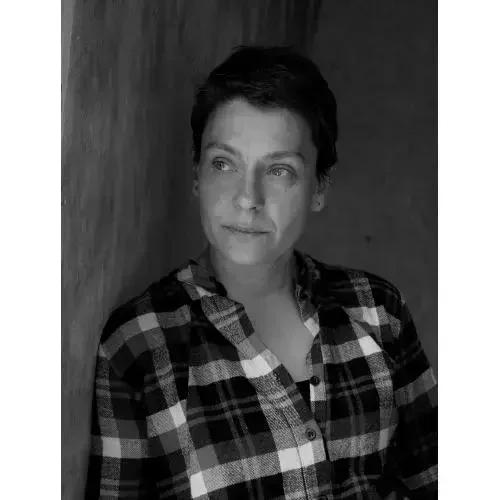
Nadejda Koseva is a Bulgarian director, writer, and producer. She directed and co-wrote the short fiction film The Ritual, part of the omnibus Lost and Found, which premiered in the Forum section of the Berlin International Film Festival in 2005. Her next short fiction film, Omelette, received a Special Mention at the Sundance Film Festival in 2009, among other awards worldwide. Her short film Take Two screened internationally after receiving a Special Mention at its premiere at the Sarajevo Film Festival in 2011. Her debut feature film, Irina, premiered in the Competition at the Warsaw International Film Festival and was selected for more than twenty festivals worldwide. It also received an EFA nomination for the European Discovery award. After her second feature film, The Trap, Koseva is currently developing her third, Fleur de Sel. In 2018, she founded KinoKlas, an educational programme for teenagers across Bulgaria. Since then, she has worked annually with hundreds of high school students, teaching them the art of cinema. Koseva is a member of the European Film Academy.
DIRECTOR’S STATEMENT
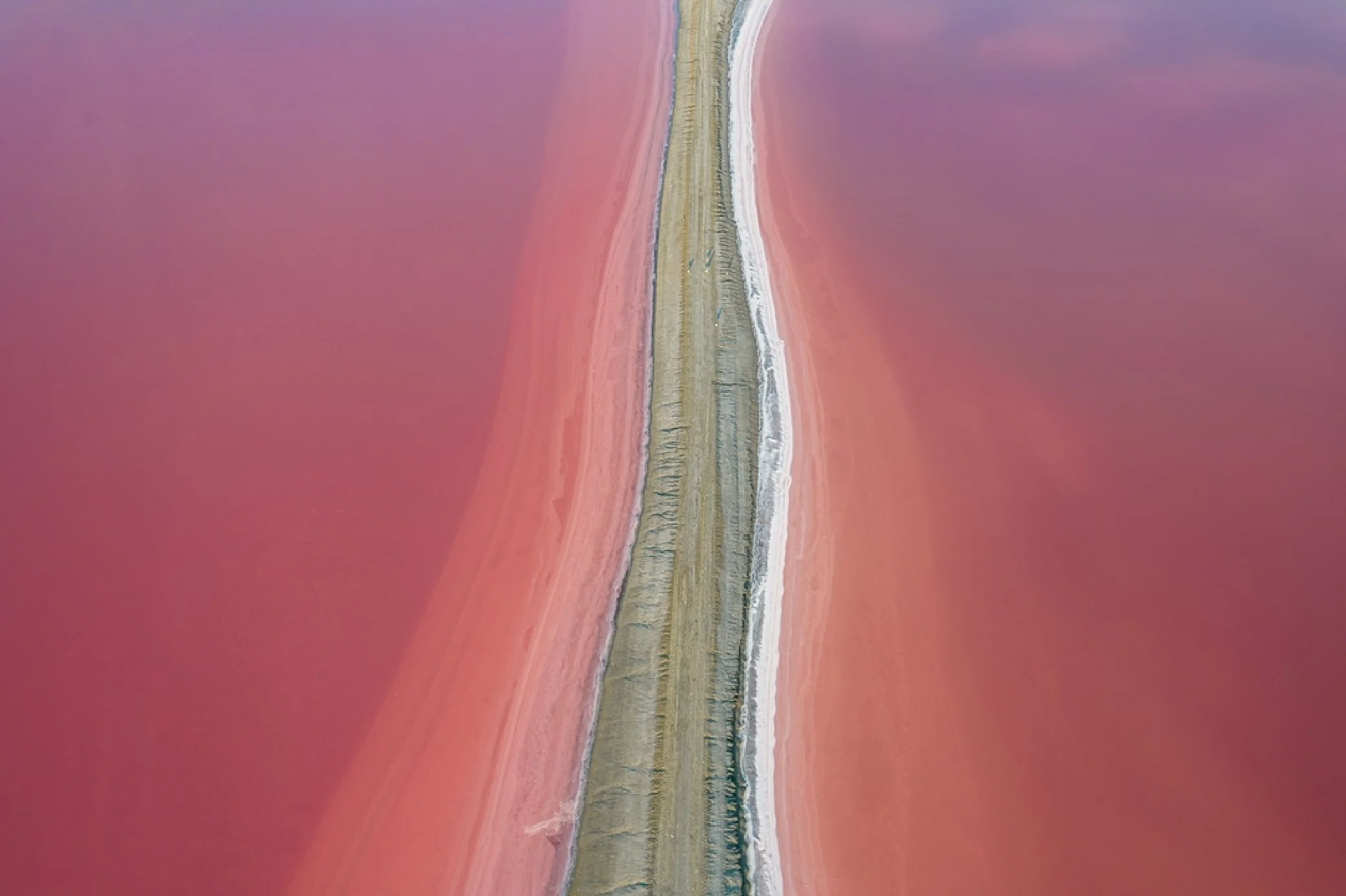
When the Sun kisses the Sea, Salt is born…
Fleur de Sel follows Nina, a young woman director whose journey toward professional recognition is interrupted by a mysterious car accident. During her rehabilitation near Burgas, where she undergoes Black Sea mud therapy, she meets Irini, a healer connected to the ancient traditions of the salt-workers. Through their bond, Nina discovers that true healing requires confronting inner wounds, and that, like salt sustaining the body, love sustains the soul. Set in the timeless landscape of the Bulgarian salt ponds, the film is a poetic exploration of trauma, forgiveness, vulnerability, and renewal. Blending realism with elements of magical realism, Fleur de Sel uses the sea, salt, light, and landscape as symbols of transformation. The visual language follows Nina’s emotional journey – from chaos and isolation toward openness, acceptance, and hope. At its core, the film is a story about two wounded women who find strength through connection, exploring the fragile balance between independence, vulnerability, and the healing power of love.
Stefan Kitanov
PRODUCER’S BIOGRAPHY
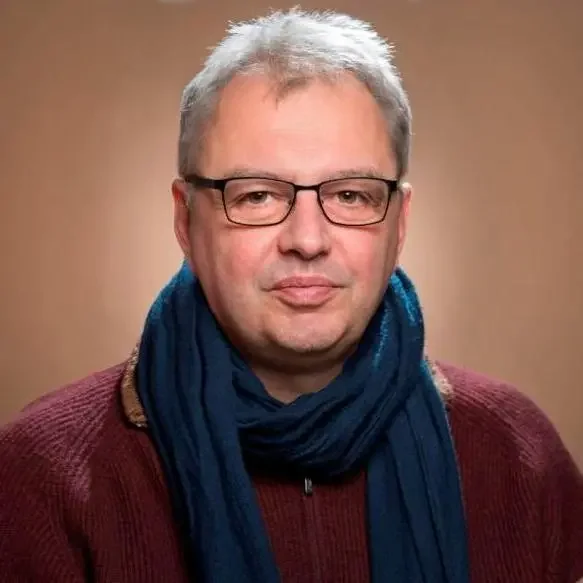
From 1992 through 1999, Stefan Kitanov was the director and programmer of the Cinema House, the leading art-house cinema in Bulgaria. Together with his team, he managed the cinema for another twenty years. In 1997, he founded the FIAPF-accredited Sofia International Film Festival, one of the key film events in Central and Eastern Europe. Since 1995, with the production companies he founded – RFF International and Art Fest – he has produced or co-produced more than twenty-five internationally recognised films by directors including Rangel Valchanov, Nuri Bilge Ceylan, Stephan Komandarev, Rajko Grlic, Jessica Woodworth and Peter Brosens, Levan Koguashvili, Dušan Milić, Radivoje Andrić, Yesim Ustaoglou, Nadejda Koseva, Teddy Moskov, and Nikolay Yotov. In Bulgaria, Kitanov has released theatrically more than 160 European films by Wim Wenders, Michael Haneke, Lars von Trier, Aki Kaurismäki, Terry Gilliam, Nuri Bilge Ceylan, the Dardenne Brothers, Danis Tanović, Marco Bellocchio, François Ozon, Fatih Akin, Ken Loach, Margarethe von Trotta, Hirokazu Kore-eda, Jafar Panahi, Alice Rohrwacher, Andrej Zvyagintsev, and Kornél Mundrucsó, among others. Kitanov was the Bulgarian representative on the board of management of Eurimages from 1997 through 2000. He has been a member of festival juries in Venice, Cannes, Karlovy Vary, Busan, Warsaw, Cairo, Moscow, Cluj, Wiesbaden, Thessaloniki, Yerevan, Lecce, Vologda, Komarom, and Torino, as well as for the European Parliament, and the European Film Academy. He is a member of the EFA and the MBE.
PRODUCER’S STATEMENT
This is the fourth film project I have developed with Nadejda Koseva. The first was the omnibus Lost and Found (2005), a co-production of Germany-Bulgaria-Romania-Hungary-Bosnia and Herzegovina-Serbia-Estonia, which opened the Forum section of the Berlin International Film Festival. The film launched a strong generation of Central and East European filmmakers, among them Cristian Mungiu, Jasmila Zbanić, Kornél Mundruczó, Stefan Arsenijević, and Nadejda Koseva. With their next films, Mungiu won the Palme d’Or, Žbanić the Golden Bear, Mundruczó the Un Certain Regard Award, Arsenijević the Crystal Globe. The next short I made together with Koseva, Take Two (2011), was a Bulgarian-German co-production, well received by international festivals. Koseva also directed the short film Omelette (2014), which received a Special Mention at the Sundance Film Festival. Her feature-length debutwas the low-budget Irina (2018), which we made together. The film premiered in the International Competition of the Warsaw Film Festival and received more than fifteen awards around the world, as well as a nomination for the EFA Discovery Award. The film was released by Alpha Violet and sold to more than twenty territories. Fleur de Sel is currently in the development and financing phase. The screenplay is co-written with leading Bulgarian writer Simeon Ventsislavov, whose credits include Made in EU (Venice, 2026), Windless (Karlovy Vary, 2024), Blaga's Lessons (Crystal Globe, Karlovy Vary, 2023), and Ága (Berlinale, 2018), among others. In 2014, the project participated in the Mediterranean Film Institute's Script2Film Workshop, which had a significant positive impact on the writing process. The professional feedback received during the workshop proved extremely valuable and helped shape the creative direction of subsequent drafts. Fleur de Sel is a deeply personal story, and I believe it carries emotions and an atmosphere that will resonate with audiences across cultures and territories.
Production company profile
RFF International is a production company. It was founded in January 1995 and its first activity was to be associate producer of the British film England, My England by acclaimed director Tony Palmer. The first film produced by RFF as majority producer was the creative documentary Passions for Lea (2000) by Nikolay Yotov, which won the Golden Rhyton for Best Bulgarian Documentary. In 1997, the company founded the Music Film Festival, which soon after became the FIAPF-accredited Sofia International Film Festival – the leading film festival in Bulgaria and one of the key film events in Central and Eastern Europe. RFF International was founded by Stefan Kitanov, who also founded Art Fest Ltd in 2001. The activities of RFF are concentrated in the production and co-production of fiction and documentary films. In recent years RFF has also been involved in limited distribution. RFF and Art Fest work hand in hand. Since the foundation of Art Fest in 2001, the festival activities were concentrated with the new company, which runs the Sofia International Film Festival, the Sofia Meetings co-production market, distribution, exhibition, management of Cinema House, a travelling festival, and other projects in the audiovisual field. Over the years RFF, together with its daughter company Art Fest, has produced or co-produced more than twenty films, the most successful of which was The World Is Big and Salvation Lurks around the Corner by Stephan Komandarev (2008, Bulgaria-Germany-Hungary-Slovenia-Serbia), which was short-listed for the Academy Award for Best Foreign Language Film, participated in more than eighty international film festivals, received thirty awards, and was sold to more than one hundred territories. The most recent success of RFF were the co-productions The Wild Pear Tree by Nuri Bilge Ceylan (2018, Cannes Official Competition), Dusan Milić’s Darkling (2022, Audience Award in Trieste; Serbian entry for the Academy Awards) and Rajko Grlic’s It All Ends Here (2024). Curre feature-length projects include What Remains by Yesim Ustaoglu (post-production), Cold’ by Ana Kitanova (post-production), Fro, Dust to Dust by Krzysztof Zanussi (post-production), Fleur de sel by Nadejda Koseva (development), and Love Will Take Us Apart (pre-production).
Where are we at?
TOTAL ESTIMATED BUDGET
1.069.389 €
FINANCES PENDING
265.000 €
FINANCING IN PLACE
804.389 €
Production timeline
May 2022 - September 2025
Scriptwritting
May 2022 - December 2026
Budgeting and financing
May 2022 - December 2026
Participation in markets and script development programs
January 2024 - March 2027
Location scouting and casting
April 2027
Pre-production
May - June 2027
Filming
July - September 2027
Picture editing
October - November 2027
Sound post-production
December 2027
Final cut approved
First half of 2028
Premiere