
Filip Mojzeš
THE FIRST WEEK OF AUGUST
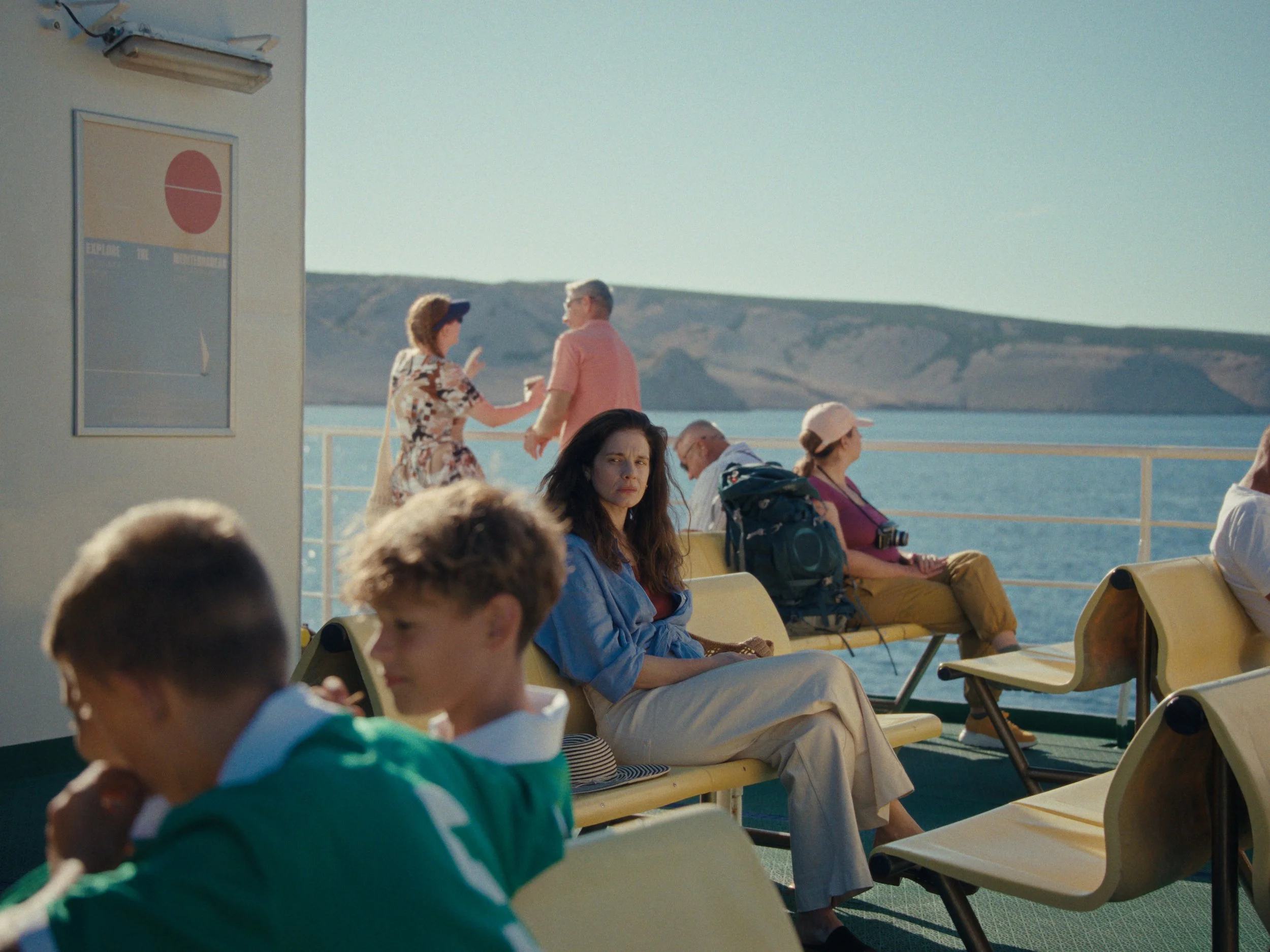
An idyllic island vacation takes a tumultuous turn when a mother's sudden physical outburst towards her ten-year-old son exposes hidden tensions and lingering conflicts within the family.
SYNOPSIS
The First Week of August is a family drama centered around the summer vacation of a middle-class married couple, Zoran and Ivana, a journalist who, after experiencing psychological trauma, unexpectedly and violently attacks their ten-year-old son, David, while slowly beginning to lose control over his behavior. As the vacation progresses, deeper issues in the relationship between Zoran and Ivana begin to surface, and these problems eventually extend to their interactions with the four-member family of their neighbors. In her desperate attempt to fit back into the boundaries of "normality," balancing her roles as a mother, wife, and a public media figure, Ivana struggles to regain control over her own life.
Set against the backdrop of a picturesque Mediterranean summer, the narrative unfolds as Ivana's psychological and emotional unraveling becomes increasingly apparent. As she grapples with her deteriorating sense of self and fractured family dynamics, the holiday turns into a battlefield of repressed tensions, unspoken frustrations, and unresolved trauma.
DIRECTOR
Filip Mojzeš
WRITER
Filip Mojzeš
PRODUCERS
Tamara Babun Zovko, Matija Drniković
PRODUCTION COMPANIES
Wolfgang&Dolly, Black Photon
COUNTRIES
Croatia, Poland
GENRE
Fiction
Filip Mojzeš


DIRECTOR’S BIOGRAPHY
Filip Mojzeš is a Croatian screenwriter, and director whose work often explores themes of alienation, violence, and fractured interpersonal relationships. His films are typically minimalistic, atmosphere-driven, and focused on internal states rather than plot-heavy narratives. He was born in Zagreb in 1989 and trained in film directing at the Academy of Dramatic Art in Zagreb, later continuing his studies at the film.factory program in Sarajevo, where he was mentored by acclaimed Hungarian director Béla Tarr. His last three short fiction films premiered in the competition programmes of the Sarajevo Film Festival. Following their premieres, the films continued to circulate widely, screening at numerous national and international festivals
DIRECTOR’S STATEMENT
As in several of my most recent short films, The First Week of August also explores complex family dynamics. In that sense, the film represents a natural continuation of my ongoing preoccupation with the fragility of the nuclear family, while also emerging from the strong influence of films such as Lucrecia Martel’s The Headless Woman and John Cassavetes’ A Woman Under the Influence. It was precisely these two films that provided my initial motivation for exploring the figure of the “woman on the edge.” At the same time, the film’s premise grew out of an extensive process of working with the actors, particularly Ivana Roščić, which began at the earliest stages of the screenplay’s development. A significant part of my writing process is based on a method in which actors become co-creators of their roles, essentially starting from a synopsis and developing material drawn from their own personal experiences. With The First Week of August, I am also introducing strong autobiographical elements into a feature film screenplay for the first time, attempting in this way to delve even deeper into the complex dynamics of parent-child relationships.
More generally, what I find particularly compelling in cinema is an atmosphere of mystery. For this reason, while writing the screenplay, I wanted the protagonist’s backstory to remain unknown, allowing Ivana, as the central character, to function as a kind of enigma. In this regard, I found Apichatpong Weerasethakul’s definition of the character Jessica in Memoria particularly inspiring. He described her, rather radically, as “a supposition rather than a character.” I was therefore especially interested in the multiple possible interpretations of Ivana’s trauma, which open up an entire spectrum of readings, while a series of situations simultaneously reveals her fundamental inability to fit within the confines of bourgeois “normality” and prescribed social roles. In contrast to Ivana’s seemingly “displaced” perspective, the outside world represents what Lacan calls the “social construction of reality”—the symbolic order that defines a social group. In this sense, the “conspiracy of silence” surrounding Ivana’s condition paradoxically becomes an authentic expression of class belonging.
Tamara Babun Zovko
PRODUCER’S BIOGRAPHY
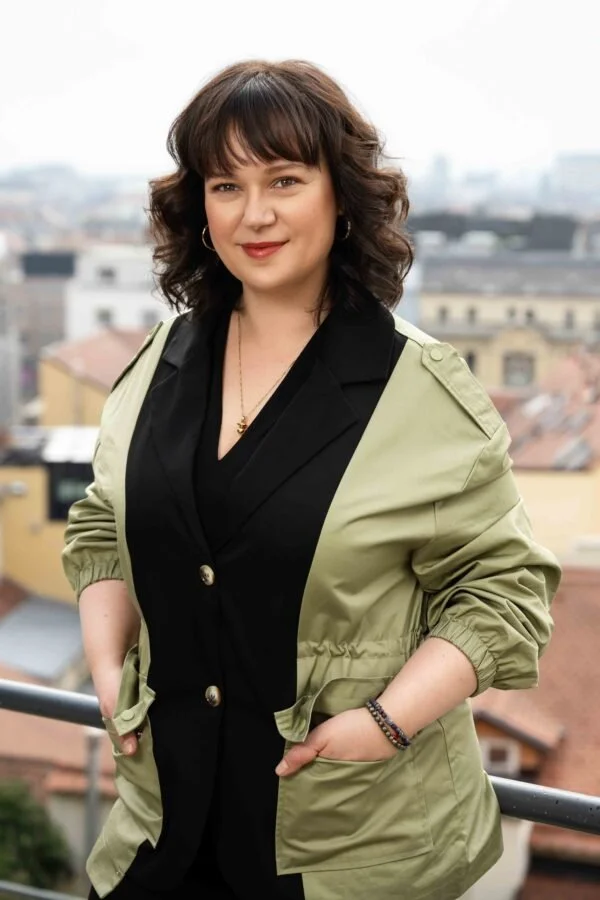
Tamara Babun Zovko was born in Zagreb in 1985. She graduated from studies in film, television, and theatre production at the Academy of Dramatic Arts in 2009. After a decade of experience in producing films, videos, and theatre, in 2017 she started her own company – Wolfgang & Dolly LLC. She took part in the Eurimages gender equality ad hoc working group in Strasbourg, has consulted for the Romedia Foundation in Budapest, and has worked on various legislative agendas as a member of the Managing Board and Supervisory Board of the Croatian Producers' Association. Zovko is a past member of the FIAPF Executive Committee. She has taken part in the Emerging Producers training, Less Is More Development Angles, Sources 2, Screen Leaders, Ex Oriente, a local EURODOC workshop, Talents Sarajevo, the IDFAcademy, BDC Discoveries, Producers on the Move, and EAVE+, and is a 2019 EAVE Producers Workshop graduate. She is the creator or co-creator of several documentary series and has projects in development, production, and post-production as producer and director.
PRODUCER’S STATEMENT
The First Week of August marks the live-action feature debut of Filip Mojzeš, whose previous short films (White Bone Death, Elephant's Graveyard, and Angina Pectoris) were well-received by the Sarajevo Film Festival audience. Set during a classic family vacation, the film explores the psychological toll of professional downfall and burnout on an accomplished woman. In his distinct narrative style, Mojzeš subverts audience expectations, forcing a confrontation with the quiet exhaustion and disconnect inherent to modern life, even, and perhaps especially, for those who seemingly "have it all" in terms of financial stability and social status. The film features a striking visual language created in close collaboration between the director and DP Gregor Božić, brought to life by a strong chamber cast led by Ivana Roščić, Jerko Marčić, Marko Makovičić, Ivana Krizmanić, and emerging talent Roko Peševski. A Croatian-Polish co-production, The First Week of August is currently in advanced picture editing, with completion targeted for late 2026 / early 2027. We are seeking finishing support for sound post-production and are actively looking to connect with sales agents, distributors, broadcasters, and festival programmers.
Matija Drniković
PRODUCER’S BIOGRAPHY
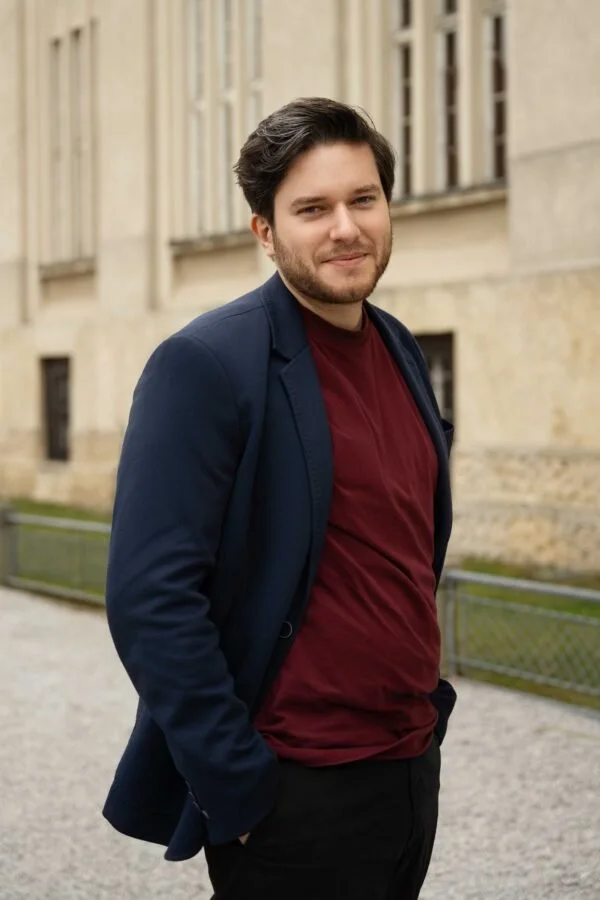
Matija Drniković was born in Zagreb in 1993 and graduated from studies in film production from the Academy of Dramatic Art in Zagreb. He worked as a junior producer at Nukleus Film and as a writer at the video game company Nanobit. He is currently a producer at Wolfgang & Dolly, where he is involved in numerous projects, many of which he initiates independently. Drniković has over eight years of experience in developing and leading film workshops for children and youth, and has also taken part in programs such as Berlinale Talents, Screen Leaders, EAVE Marketing, EAVE Ties that Bind, Rotterdam Lab, and Talents Sarajevo. He is a member of the European Film Academy. Pelican, his first feature-length fiction film as a producer, received a Special Mention at the Tallinn Black Nights Film Festival, while his co-productions Family Therapy and The Other Side of Summer premiered at the Tribeca Film Festival and the Karlovy Vary International Film Festival.
Production company profile
Wolfgang & Dolly is a Zagreb-based production company founded in 2017 by Tamara Babun Zovko. Led by Babun Zovko, Matija Drniković, and Aleksandar Arsovski – recognized participants of programmes such as EAVE, EURODOC, and Producers on the Move – the company produces auteur films, documentaries, and television series focused on socially relevant stories. Their projects have premiered at the Karlovy Vary International Film Festival, DOK Leipzig, and the Tribeca and Sarajevo Film Festivals.
Where are we at?
TOTAL ESTIMATED BUDGET
1.147.590 €
NEEDED FOR COMPLETION
128.980 €
Looking for at CineLink?
The project has Polish co-producers involved and is financed by the Polish Film Institute. With that in mind, we're currently looking for partners to complete the financing. This includes potential pre-sales to broadcasters or interested sales agents and new co-producers who would be happy to participate in this production with a smaller share, particularly, but not exclusively, those from France, Italy and other Mediterranean countries. We are also looking for various ways to gap-finance the project and are interested in presenting the project to all who show interest and good will for the film.